A monument built across cultures and centuries
Every chapel, stone block, and bell in this complex tells part of Seville's layered historical narrative.
Tabla de contenidos
From Roman Hispalis to Islamic Isbiliya
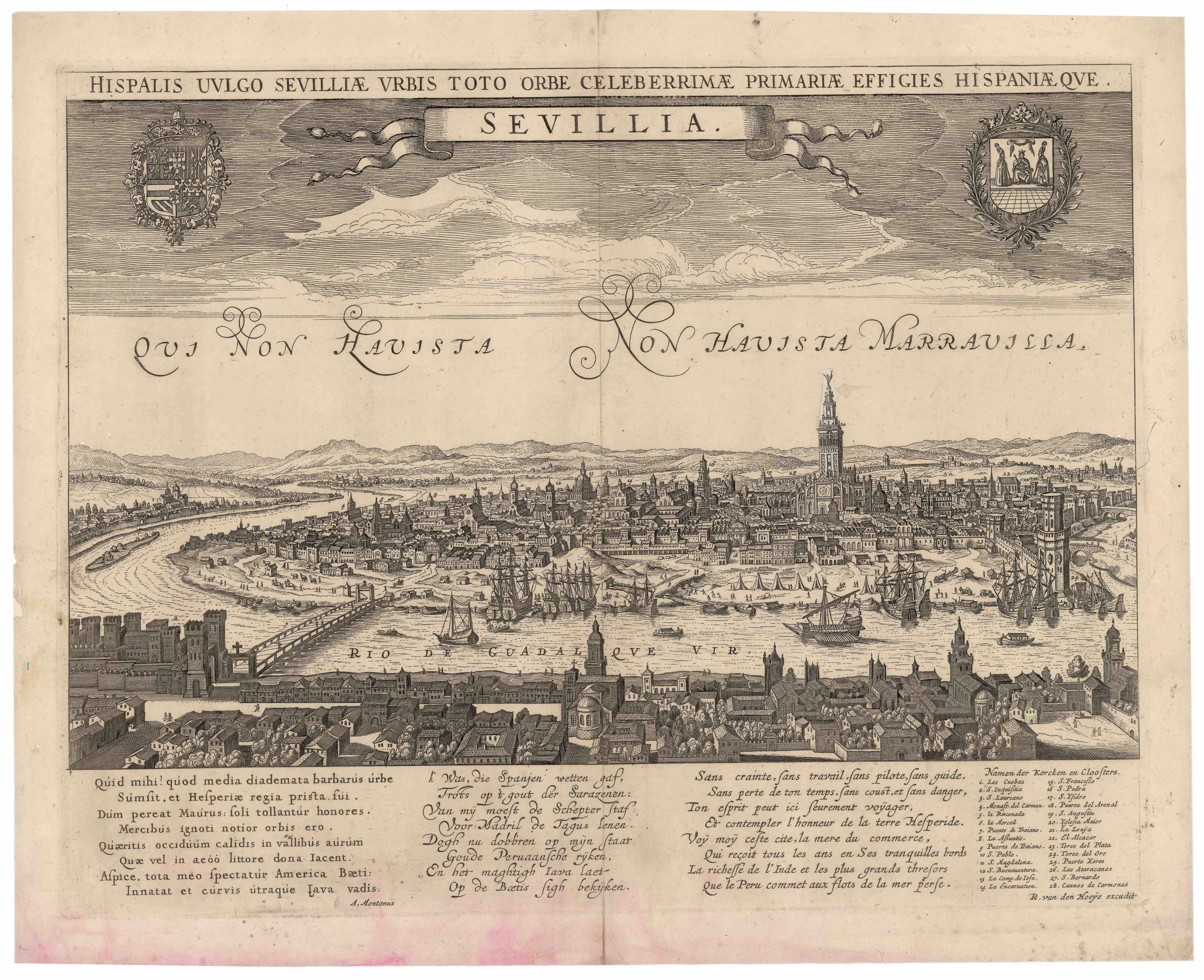
Long before the current cathedral rose above Seville's skyline, this city had already lived several lives. Roman Hispalis left its urban traces through roads, commerce, and civic organization tied to the Guadalquivir, a river that would shape Seville's destiny for millennia. After the fall of Rome and the Visigothic period, the city entered a new chapter under Islamic rule, becoming Isbiliya: a vibrant center of trade, scholarship, agriculture, and craftsmanship within al-Andalus. Its neighborhoods grew denser, irrigation systems transformed surrounding lands, and the city developed a refined architectural language that balanced utility, beauty, and climate.
What matters for today's visitor is this: Seville Cathedral did not emerge in isolation. It stands on a deeply stratified urban memory where each era reused, reinterpreted, and sometimes contested what came before. Walking around the cathedral precinct, you are moving through a palimpsest of civilizations. The materials changed, the dominant faith changed, and political power changed, yet the site remained central to public life. That continuity is one reason the place feels so charged even now; it has been a focal point for collective identity for centuries.
The Almohad mosque and the first Giralda
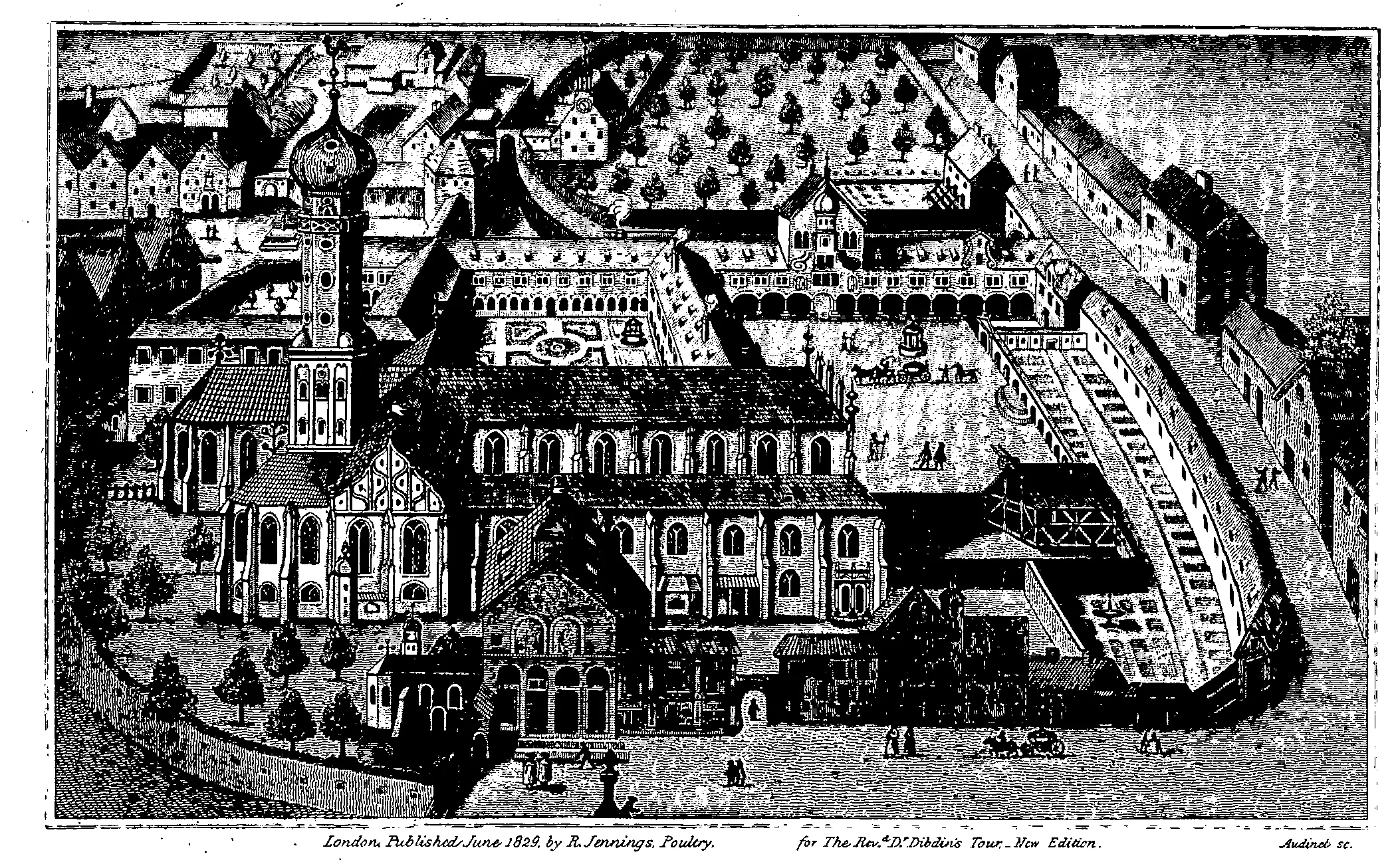
In the 12th century, under Almohad rule, Seville gained one of the great congregational mosques of the western Islamic world. The project reflected both devotional purpose and urban prestige. Its prayer hall, courtyard, and minaret were conceived as an integrated complex serving religion, governance, and social life. The minaret that would later become La Giralda was not merely decorative; it was a vertical sign of authority, orientation, and ritual rhythm, calling the faithful and anchoring the skyline with geometric clarity.
Even after later transformations, echoes of that period remain tangible. The Patio de los Naranjos preserves the memory of the former mosque courtyard, where water, shade, and ordered planting created a microclimate and a contemplative space. The ramped structure inside La Giralda reflects original engineering logic that allowed ascent with remarkable practicality for its time. These features remind us that Seville's most famous Christian monument still carries essential DNA from Islamic architecture, making it not a story of replacement alone, but of layered inheritance.
Conquest, conversion, and sacred reuse
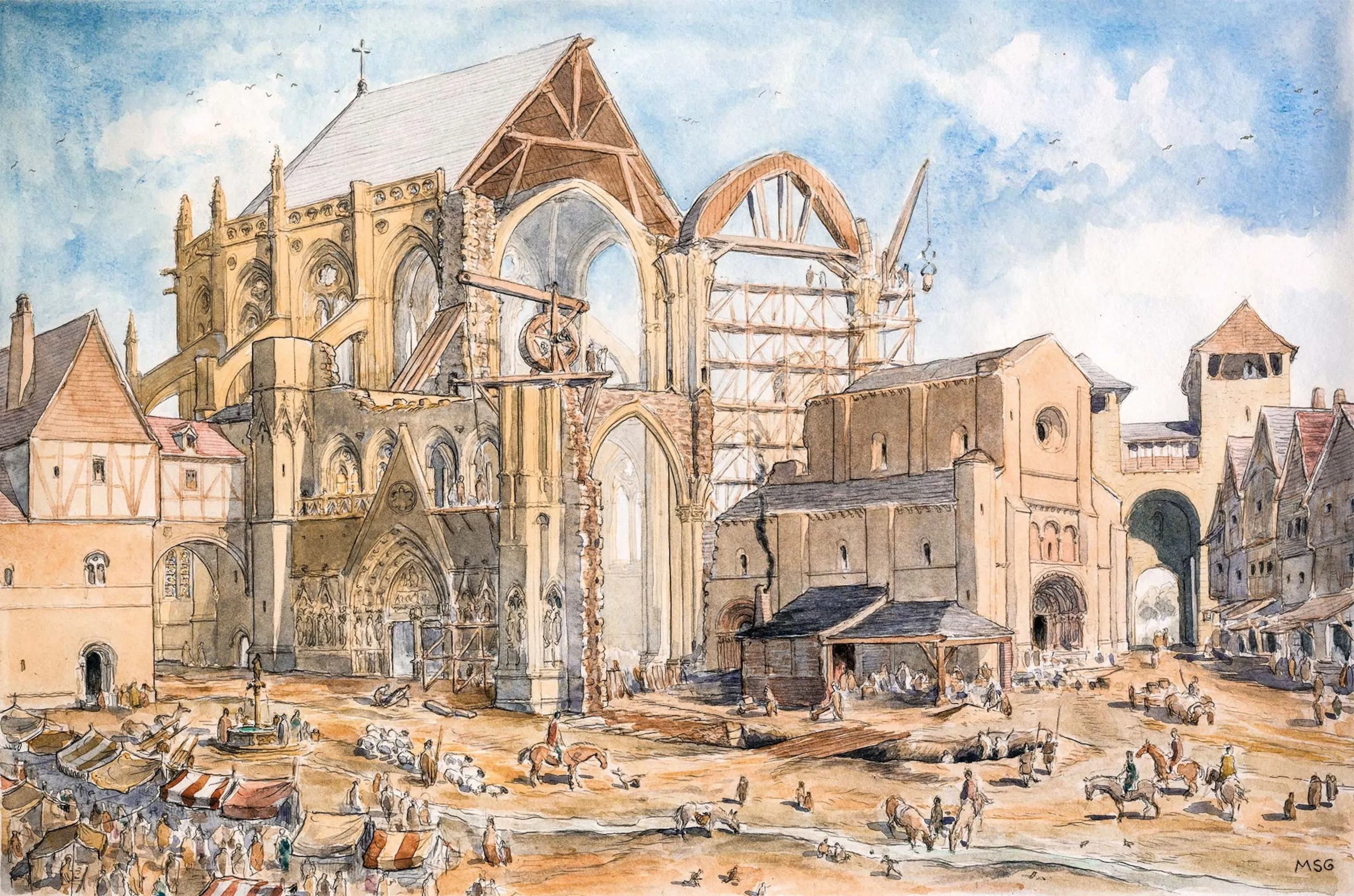
When Seville was conquered by Ferdinand III in 1248, the city's principal mosque was gradually converted for Christian worship, as happened in many Iberian cities during the medieval Reconquista. This was a political and symbolic act as much as a liturgical one: transforming the main sacred space helped establish the new order in visible, immediate terms. Yet conversion was rarely instantaneous in architectural terms. Existing structures were adapted, repaired, and re-signified over generations.
For visitors today, this period explains why Seville Cathedral's story is as much about transition as construction. The eventual decision to build a vast new Gothic church did not erase the past in one stroke; instead, it emerged from centuries of adaptation and changing ambitions. If you look closely at the complex, you can still sense that negotiation between continuity and rupture, between inherited forms and newly asserted identities.
A Gothic cathedral of extraordinary ambition
By the 15th century, Seville's leaders launched a project of astonishing scale: a Gothic cathedral intended to proclaim both religious devotion and civic grandeur. Later chroniclers famously summarized the intention as building a church so magnificent that future generations would consider its founders almost mad. Whether apocryphal or not, the phrase captures the spirit of the undertaking. The new cathedral was engineered to overwhelm in the best sense: to produce awe through height, volume, light, and ornament.
Constructing such a monument required complex logistics, financing, skilled labor networks, and long-term institutional commitment. Stonemasons, carpenters, sculptors, and metalworkers collaborated across decades, often without living to see completion. The result was not a static object but an evolving masterpiece shaped by changing styles and practical constraints. Standing inside the nave, you are witnessing accumulated labor on a civilizational scale, where architecture became a shared language of faith, authority, and urban aspiration.
Art, guilds, and the making of splendor
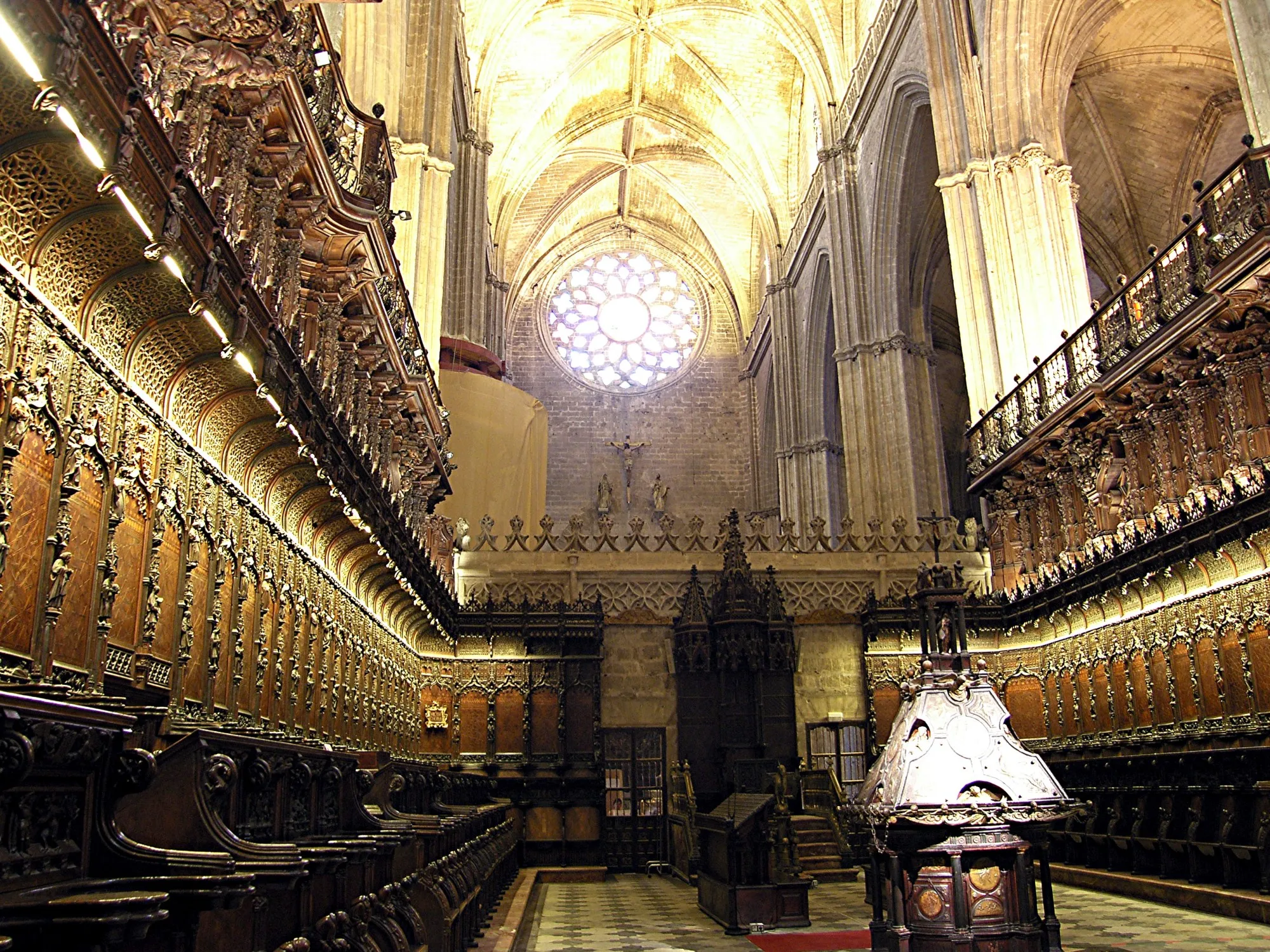
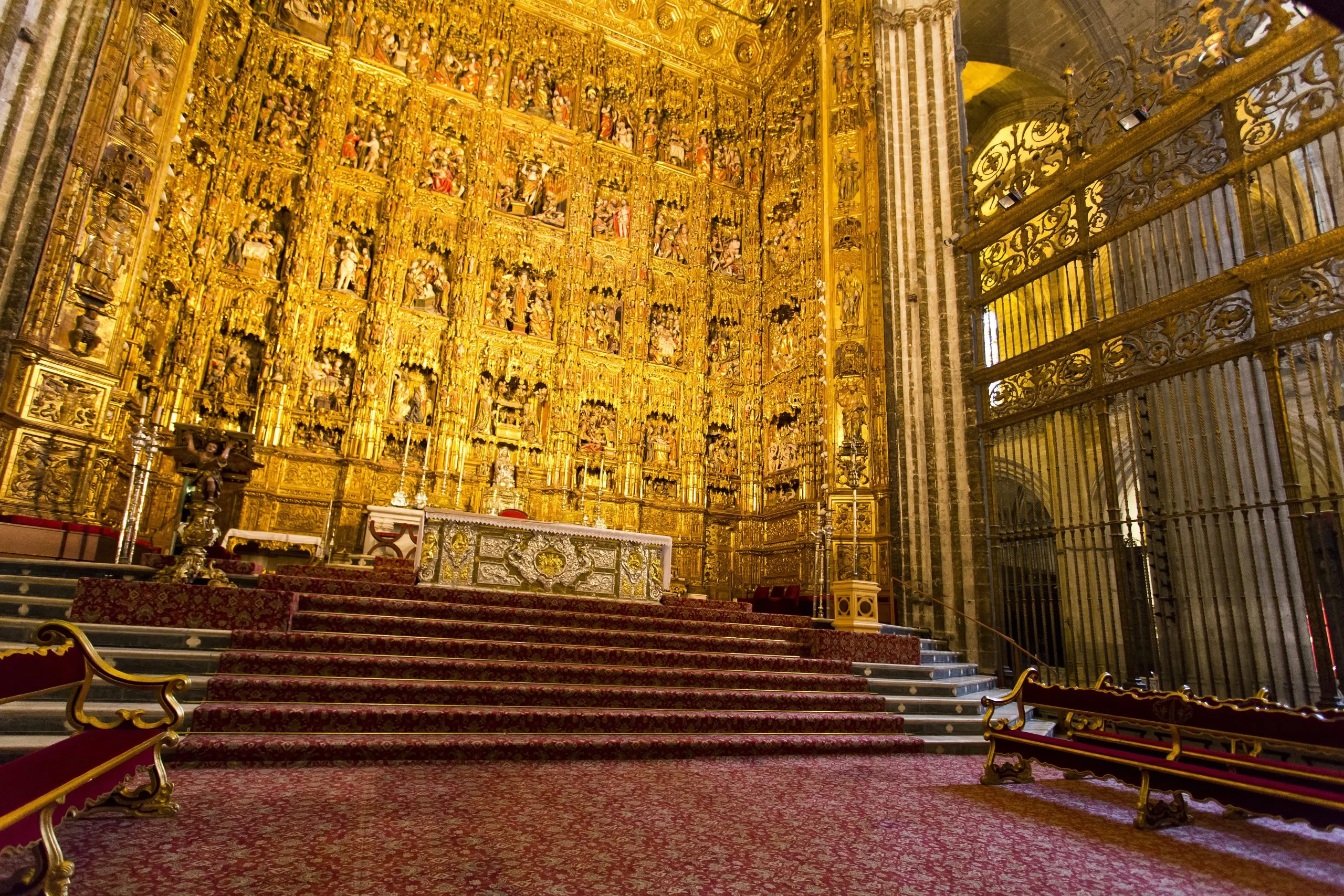
Seville Cathedral is also a museum of devotion expressed through artistic excellence. Guild structures, workshop traditions, and transregional trade routes helped supply materials and talent for altarpieces, choir stalls, liturgical objects, and funerary monuments. Gold leaf, carved wood, painted panels, and stone sculpture were not mere decoration; they were pedagogical and spiritual tools in an era when visual storytelling shaped religious imagination as powerfully as sermons.
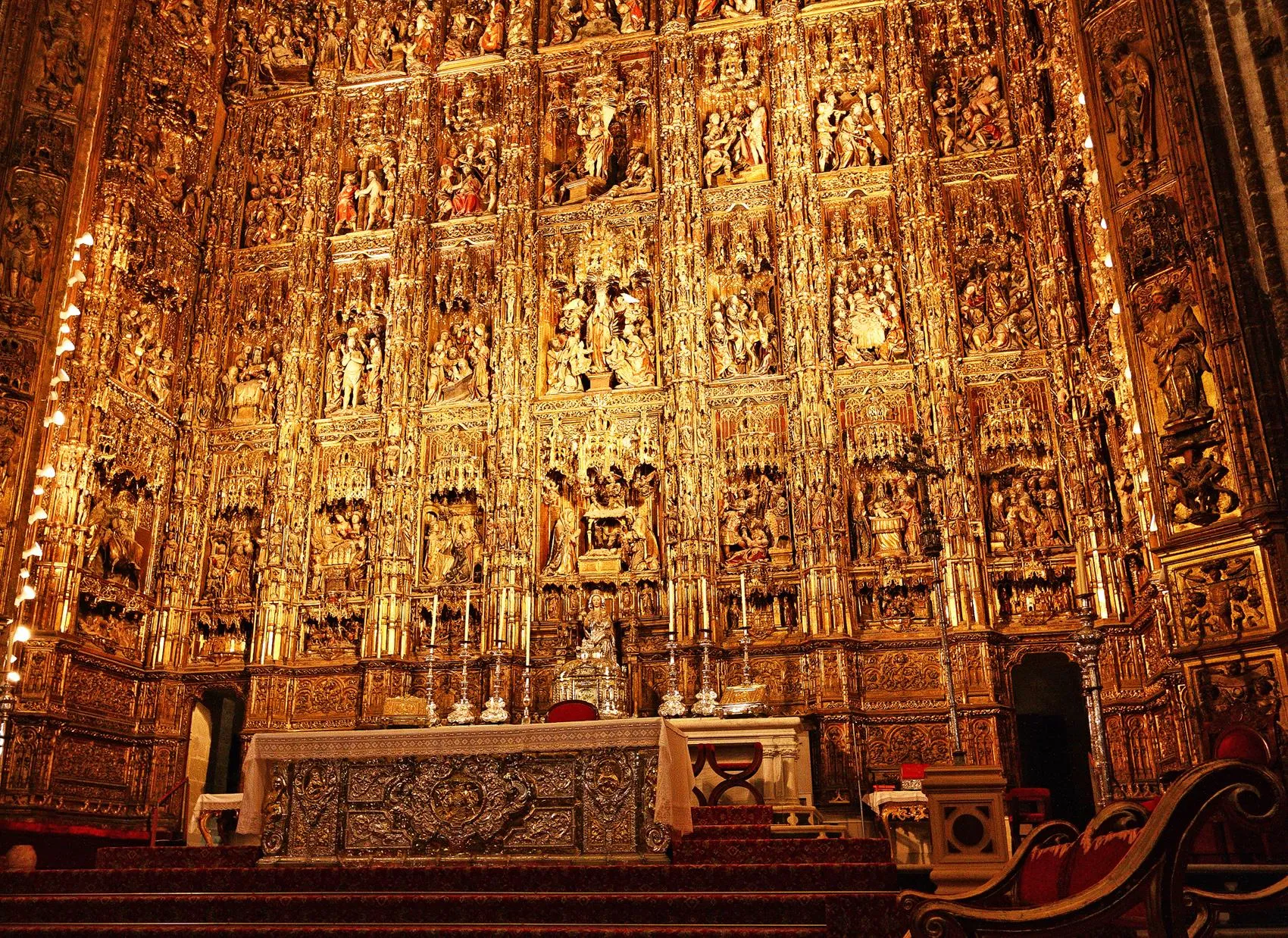
The main altarpiece in particular embodies this culture of visual theology. Monumental yet minutely detailed, it invites both distant admiration and close reading scene by scene. Visitors often describe a paradoxical sensation: the space feels immense, but attention keeps being drawn to tiny crafted details that reveal patient human hands behind imperial scale. That tension between the colossal and the intimate is one of the cathedral's deepest artistic strengths.
The tomb of Columbus and imperial memory
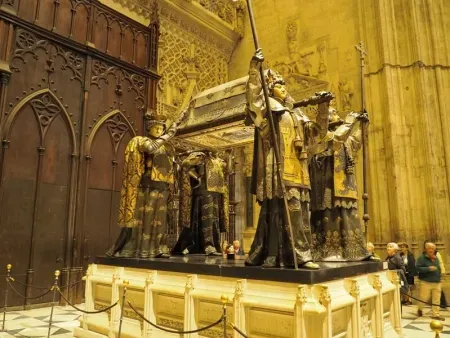
Among the most discussed points of interest is the monumental tomb traditionally associated with Christopher Columbus. Whatever one thinks of Columbus as a historical figure, the presence of his memorial in Seville Cathedral reflects the city's central role in the early modern Spanish world. After 1492, Seville became a key administrative and commercial gateway to overseas territories, and its institutions accumulated wealth, bureaucracy, and global influence at extraordinary speed.
For contemporary visitors, this legacy can prompt both fascination and critical reflection. The cathedral preserves the triumphal imagery of an imperial era, yet modern historical understanding also foregrounds the violence, extraction, and human costs tied to expansion. Seen this way, the site becomes not a simple celebration, but a place where memory is negotiated. It invites visitors to hold complexity: artistic brilliance and political power, spiritual grandeur and historical contradiction, all in the same stone envelope.
Renaissance and Baroque additions
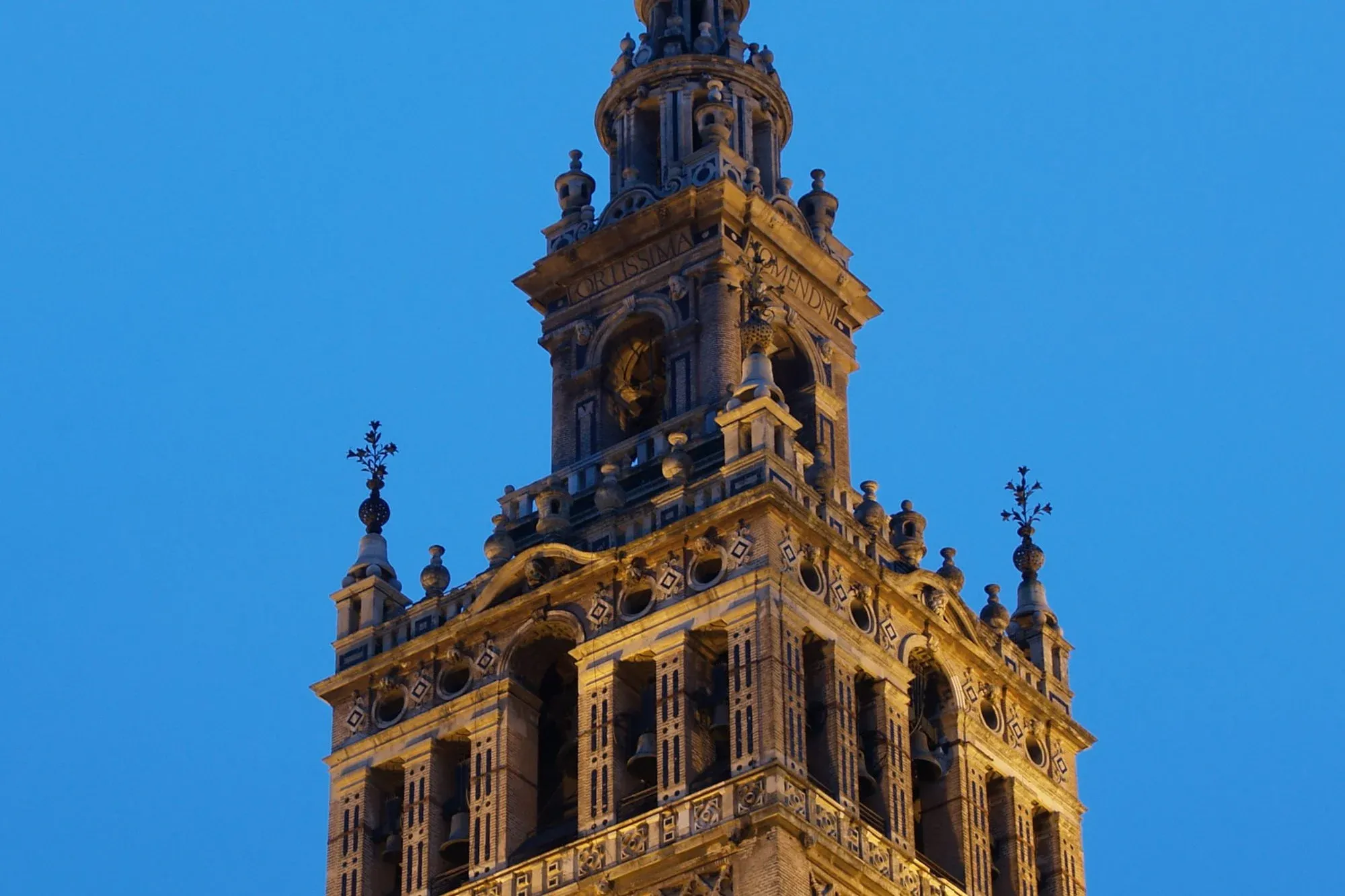
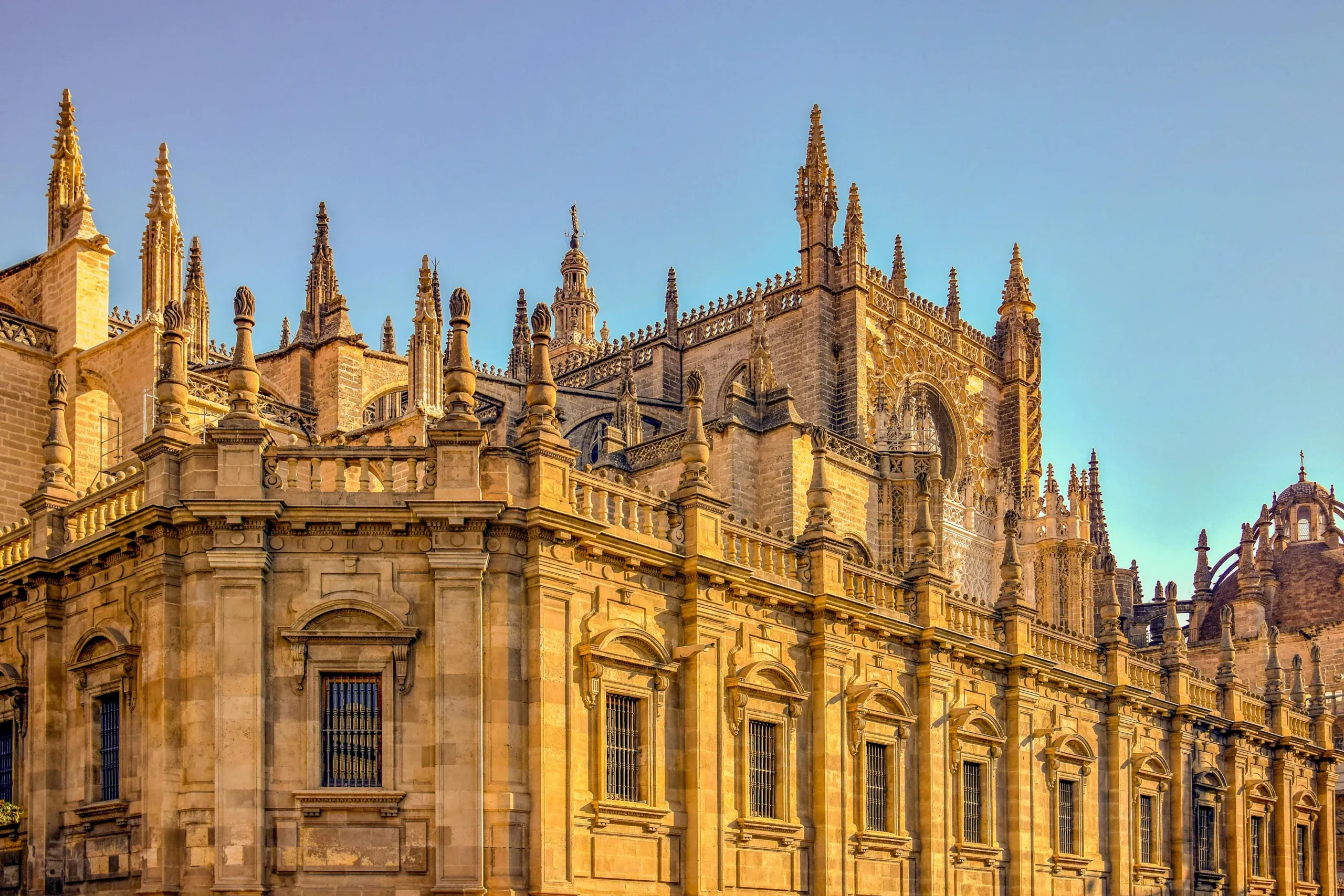
Like most major European cathedrals, Seville's was never truly finished in a single style. Renaissance and later Baroque interventions introduced new decorative vocabularies, updated chapels, and altered liturgical furniture in response to changing theological and cultural priorities. Rather than diminishing Gothic coherence, these additions created a layered interior that mirrors the long duration of Catholic ritual life in Iberia.
As you move from one chapel to another, you may notice abrupt stylistic shifts: restrained stone transitions into theatrical ornament, while medieval spatial logic meets early modern visual drama. This is not inconsistency; it is historical continuity in real time. The building recorded evolving tastes because it remained active, funded, and meaningful across generations. Its beauty lies partly in that accumulated conversation between eras.
La Giralda from minaret to bell tower
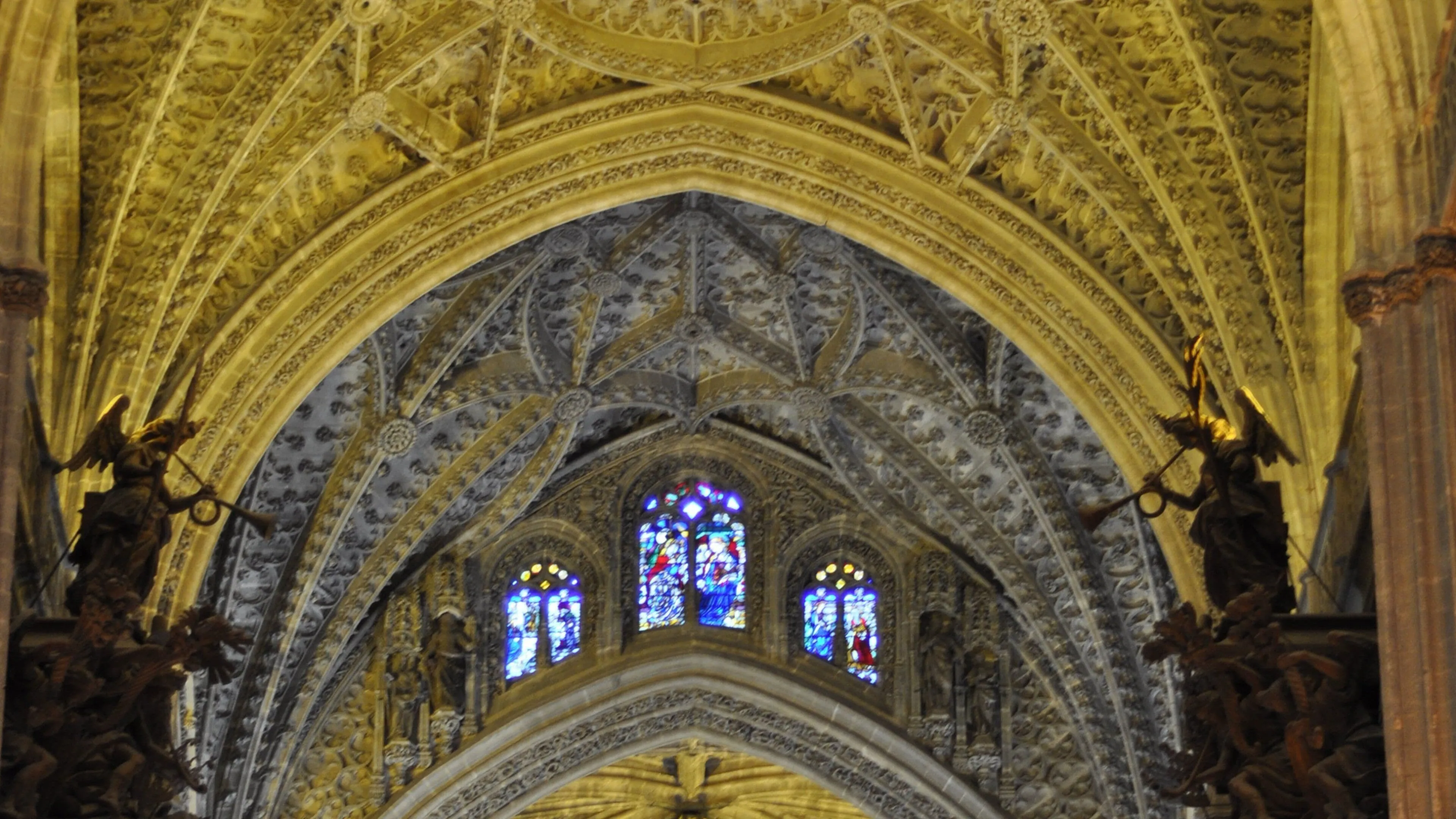
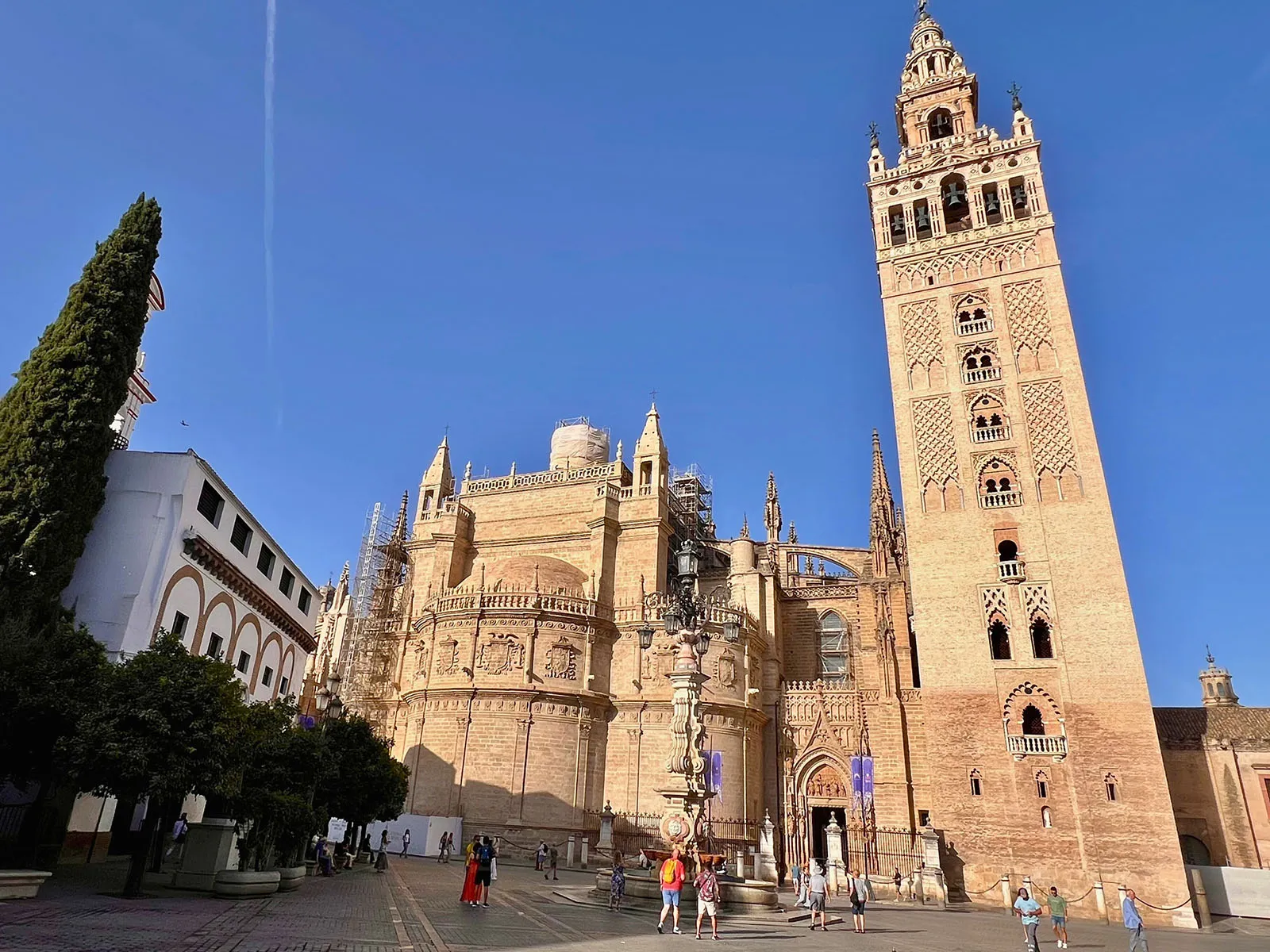
La Giralda is perhaps Seville's clearest emblem of transformation through adaptation. The lower body preserves the disciplined Almohad language of brickwork and proportion, while the Christian period introduced a Renaissance belfry and, later, the famous weather vane sculpture that gave the tower its name. Instead of demolishing and rebuilding from scratch, Seville integrated old and new, creating a landmark that physically embodies historical transition.
The climb itself narrates this story better than any plaque. Each ramp feels like a passage between epochs, and the changing views through openings reveal the city as a lived continuum rather than separate historical islands. By the time you reach the top, La Giralda is no longer just a viewpoint: it has become an architectural argument for continuity, reinvention, and coexistence across time.
Earthquakes, repairs, and resilience
Monuments of this scale survive not by accident but through constant care. Seville Cathedral and La Giralda have faced structural stress, weathering, and the long-term effects of humidity, pollution, and occasional seismic events felt across southern Iberia. Repairs after damage, reinforcement campaigns, and ongoing conservation have all been essential to preserving both safety and artistic integrity.
For visitors, restoration scaffolding can sometimes seem disappointing at first glance. In reality, it is a sign that the monument remains responsibly managed. Conservation teams are effectively in dialogue with medieval and early modern builders, solving contemporary technical challenges while honoring historical materials and techniques. The site you see today is therefore both ancient and actively maintained, a fragile inheritance sustained by specialist labor.
UNESCO recognition and global significance
Seville Cathedral, together with the Real Alcazar and Archivo de Indias, forms a UNESCO World Heritage ensemble recognized for exceptional universal value. The designation reflects not only architectural excellence but also the intertwined narratives of religion, governance, commerce, and cross-cultural exchange that shaped Seville's role in Mediterranean and Atlantic history.
UNESCO status also brings responsibilities: careful visitor management, conservation funding, scholarly documentation, and public education. In practical terms, this means your ticket contributes to preserving a site of international importance, not merely a local attraction. The monument belongs to Seville, certainly, but it also belongs to a broader human story.
Daily worship in a monumental space
Despite its fame, Seville Cathedral is not just a museum. It remains an active religious institution with liturgical calendars, ceremonies, and devotional life that continue to shape access and atmosphere. This living dimension matters: it helps explain why the space feels different from a purely secular monument. Ritual use keeps architecture connected to purpose.
As a visitor, approaching with respect enriches the experience for everyone. Moments of silence, modest dress expectations, and temporary access limits during services are part of the site's identity, not inconveniences to be removed. They remind us that heritage can be both public and sacred, both educational and devotional.
How to read symbols inside the cathedral
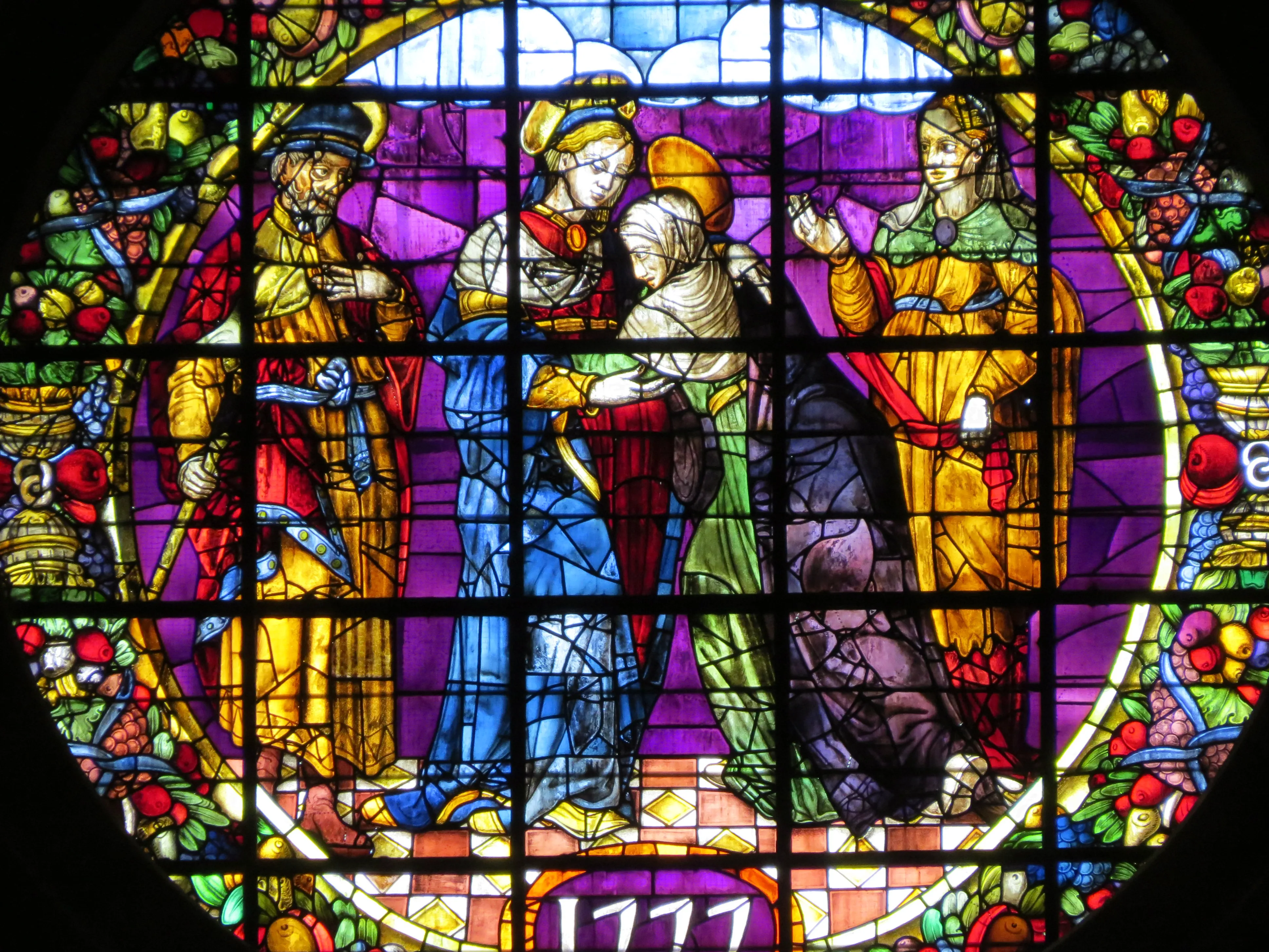
One of the most rewarding ways to experience the cathedral is to treat it like a text in stone, wood, and light. Heraldic emblems, saintly attributes, biblical scenes, and funerary inscriptions all communicate messages about power, salvation, memory, and civic prestige. Even if you are not an expert in Christian iconography, guided interpretation or a good audio resource can transform what first appears decorative into a rich narrative language.
Notice how movement through space is choreographed: narrow passages open into broad vistas, dim chapels contrast with luminous crossings, and vertical elements repeatedly draw your gaze upward. These choices were intentional. They shaped emotion as much as understanding. Reading the cathedral this way reveals not only what people believed, but how architecture was designed to make belief felt.
Why this site still defines Seville
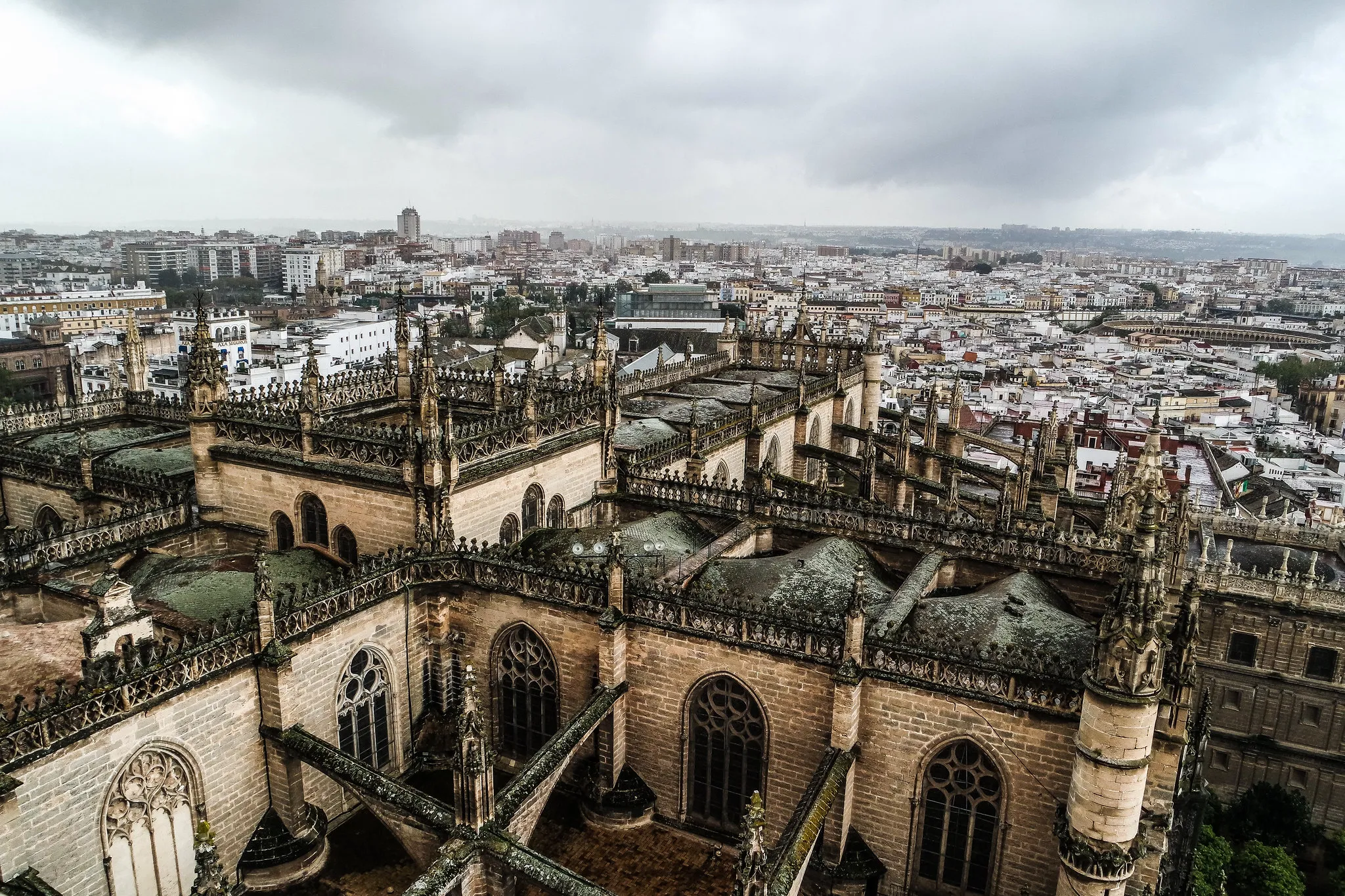
Today, Seville Cathedral and La Giralda remain central to the city's self-image because they hold multiple identities at once. They are sacred and civic, local and global, familiar and overwhelming. Residents navigate around them in daily routines; visitors orient themselves by their silhouette; artists and photographers keep returning to their textures of light and stone.
In an age of rapid tourism and short attention spans, this complex still rewards slow looking. It asks you to consider continuity across difference, and to see history not as a distant sequence of dates but as a lived process embodied in architecture. That is why people leave with more than photos. They leave with a stronger sense of Seville itself.
Tabla de contenidos
From Roman Hispalis to Islamic Isbiliya
Long before the current cathedral rose above Seville's skyline, this city had already lived several lives. Roman Hispalis left its urban traces through roads, commerce, and civic organization tied to the Guadalquivir, a river that would shape Seville's destiny for millennia. After the fall of Rome and the Visigothic period, the city entered a new chapter under Islamic rule, becoming Isbiliya: a vibrant center of trade, scholarship, agriculture, and craftsmanship within al-Andalus. Its neighborhoods grew denser, irrigation systems transformed surrounding lands, and the city developed a refined architectural language that balanced utility, beauty, and climate.
What matters for today's visitor is this: Seville Cathedral did not emerge in isolation. It stands on a deeply stratified urban memory where each era reused, reinterpreted, and sometimes contested what came before. Walking around the cathedral precinct, you are moving through a palimpsest of civilizations. The materials changed, the dominant faith changed, and political power changed, yet the site remained central to public life. That continuity is one reason the place feels so charged even now; it has been a focal point for collective identity for centuries.
The Almohad mosque and the first Giralda
In the 12th century, under Almohad rule, Seville gained one of the great congregational mosques of the western Islamic world. The project reflected both devotional purpose and urban prestige. Its prayer hall, courtyard, and minaret were conceived as an integrated complex serving religion, governance, and social life. The minaret that would later become La Giralda was not merely decorative; it was a vertical sign of authority, orientation, and ritual rhythm, calling the faithful and anchoring the skyline with geometric clarity.
Even after later transformations, echoes of that period remain tangible. The Patio de los Naranjos preserves the memory of the former mosque courtyard, where water, shade, and ordered planting created a microclimate and a contemplative space. The ramped structure inside La Giralda reflects original engineering logic that allowed ascent with remarkable practicality for its time. These features remind us that Seville's most famous Christian monument still carries essential DNA from Islamic architecture, making it not a story of replacement alone, but of layered inheritance.
Conquest, conversion, and sacred reuse
When Seville was conquered by Ferdinand III in 1248, the city's principal mosque was gradually converted for Christian worship, as happened in many Iberian cities during the medieval Reconquista. This was a political and symbolic act as much as a liturgical one: transforming the main sacred space helped establish the new order in visible, immediate terms. Yet conversion was rarely instantaneous in architectural terms. Existing structures were adapted, repaired, and re-signified over generations.
For visitors today, this period explains why Seville Cathedral's story is as much about transition as construction. The eventual decision to build a vast new Gothic church did not erase the past in one stroke; instead, it emerged from centuries of adaptation and changing ambitions. If you look closely at the complex, you can still sense that negotiation between continuity and rupture, between inherited forms and newly asserted identities.
A Gothic cathedral of extraordinary ambition
By the 15th century, Seville's leaders launched a project of astonishing scale: a Gothic cathedral intended to proclaim both religious devotion and civic grandeur. Later chroniclers famously summarized the intention as building a church so magnificent that future generations would consider its founders almost mad. Whether apocryphal or not, the phrase captures the spirit of the undertaking. The new cathedral was engineered to overwhelm in the best sense: to produce awe through height, volume, light, and ornament.
Constructing such a monument required complex logistics, financing, skilled labor networks, and long-term institutional commitment. Stonemasons, carpenters, sculptors, and metalworkers collaborated across decades, often without living to see completion. The result was not a static object but an evolving masterpiece shaped by changing styles and practical constraints. Standing inside the nave, you are witnessing accumulated labor on a civilizational scale, where architecture became a shared language of faith, authority, and urban aspiration.
Art, guilds, and the making of splendor
Seville Cathedral is also a museum of devotion expressed through artistic excellence. Guild structures, workshop traditions, and transregional trade routes helped supply materials and talent for altarpieces, choir stalls, liturgical objects, and funerary monuments. Gold leaf, carved wood, painted panels, and stone sculpture were not mere decoration; they were pedagogical and spiritual tools in an era when visual storytelling shaped religious imagination as powerfully as sermons.
The main altarpiece in particular embodies this culture of visual theology. Monumental yet minutely detailed, it invites both distant admiration and close reading scene by scene. Visitors often describe a paradoxical sensation: the space feels immense, but attention keeps being drawn to tiny crafted details that reveal patient human hands behind imperial scale. That tension between the colossal and the intimate is one of the cathedral's deepest artistic strengths.
The tomb of Columbus and imperial memory
Among the most discussed points of interest is the monumental tomb traditionally associated with Christopher Columbus. Whatever one thinks of Columbus as a historical figure, the presence of his memorial in Seville Cathedral reflects the city's central role in the early modern Spanish world. After 1492, Seville became a key administrative and commercial gateway to overseas territories, and its institutions accumulated wealth, bureaucracy, and global influence at extraordinary speed.
For contemporary visitors, this legacy can prompt both fascination and critical reflection. The cathedral preserves the triumphal imagery of an imperial era, yet modern historical understanding also foregrounds the violence, extraction, and human costs tied to expansion. Seen this way, the site becomes not a simple celebration, but a place where memory is negotiated. It invites visitors to hold complexity: artistic brilliance and political power, spiritual grandeur and historical contradiction, all in the same stone envelope.
Renaissance and Baroque additions
Like most major European cathedrals, Seville's was never truly finished in a single style. Renaissance and later Baroque interventions introduced new decorative vocabularies, updated chapels, and altered liturgical furniture in response to changing theological and cultural priorities. Rather than diminishing Gothic coherence, these additions created a layered interior that mirrors the long duration of Catholic ritual life in Iberia.
As you move from one chapel to another, you may notice abrupt stylistic shifts: restrained stone transitions into theatrical ornament, while medieval spatial logic meets early modern visual drama. This is not inconsistency; it is historical continuity in real time. The building recorded evolving tastes because it remained active, funded, and meaningful across generations. Its beauty lies partly in that accumulated conversation between eras.
La Giralda from minaret to bell tower
La Giralda is perhaps Seville's clearest emblem of transformation through adaptation. The lower body preserves the disciplined Almohad language of brickwork and proportion, while the Christian period introduced a Renaissance belfry and, later, the famous weather vane sculpture that gave the tower its name. Instead of demolishing and rebuilding from scratch, Seville integrated old and new, creating a landmark that physically embodies historical transition.
The climb itself narrates this story better than any plaque. Each ramp feels like a passage between epochs, and the changing views through openings reveal the city as a lived continuum rather than separate historical islands. By the time you reach the top, La Giralda is no longer just a viewpoint: it has become an architectural argument for continuity, reinvention, and coexistence across time.
Earthquakes, repairs, and resilience
Monuments of this scale survive not by accident but through constant care. Seville Cathedral and La Giralda have faced structural stress, weathering, and the long-term effects of humidity, pollution, and occasional seismic events felt across southern Iberia. Repairs after damage, reinforcement campaigns, and ongoing conservation have all been essential to preserving both safety and artistic integrity.
For visitors, restoration scaffolding can sometimes seem disappointing at first glance. In reality, it is a sign that the monument remains responsibly managed. Conservation teams are effectively in dialogue with medieval and early modern builders, solving contemporary technical challenges while honoring historical materials and techniques. The site you see today is therefore both ancient and actively maintained, a fragile inheritance sustained by specialist labor.
UNESCO recognition and global significance
Seville Cathedral, together with the Real Alcazar and Archivo de Indias, forms a UNESCO World Heritage ensemble recognized for exceptional universal value. The designation reflects not only architectural excellence but also the intertwined narratives of religion, governance, commerce, and cross-cultural exchange that shaped Seville's role in Mediterranean and Atlantic history.
UNESCO status also brings responsibilities: careful visitor management, conservation funding, scholarly documentation, and public education. In practical terms, this means your ticket contributes to preserving a site of international importance, not merely a local attraction. The monument belongs to Seville, certainly, but it also belongs to a broader human story.
Daily worship in a monumental space
Despite its fame, Seville Cathedral is not just a museum. It remains an active religious institution with liturgical calendars, ceremonies, and devotional life that continue to shape access and atmosphere. This living dimension matters: it helps explain why the space feels different from a purely secular monument. Ritual use keeps architecture connected to purpose.
As a visitor, approaching with respect enriches the experience for everyone. Moments of silence, modest dress expectations, and temporary access limits during services are part of the site's identity, not inconveniences to be removed. They remind us that heritage can be both public and sacred, both educational and devotional.
How to read symbols inside the cathedral
One of the most rewarding ways to experience the cathedral is to treat it like a text in stone, wood, and light. Heraldic emblems, saintly attributes, biblical scenes, and funerary inscriptions all communicate messages about power, salvation, memory, and civic prestige. Even if you are not an expert in Christian iconography, guided interpretation or a good audio resource can transform what first appears decorative into a rich narrative language.
Notice how movement through space is choreographed: narrow passages open into broad vistas, dim chapels contrast with luminous crossings, and vertical elements repeatedly draw your gaze upward. These choices were intentional. They shaped emotion as much as understanding. Reading the cathedral this way reveals not only what people believed, but how architecture was designed to make belief felt.
Why this site still defines Seville
Today, Seville Cathedral and La Giralda remain central to the city's self-image because they hold multiple identities at once. They are sacred and civic, local and global, familiar and overwhelming. Residents navigate around them in daily routines; visitors orient themselves by their silhouette; artists and photographers keep returning to their textures of light and stone.
In an age of rapid tourism and short attention spans, this complex still rewards slow looking. It asks you to consider continuity across difference, and to see history not as a distant sequence of dates but as a lived process embodied in architecture. That is why people leave with more than photos. They leave with a stronger sense of Seville itself.